| Personal Information | |
|---|---|
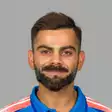
| Born | November 05, 1988 |
| Birth Place | Delhi |
| Height | 5 ft 9 in |
| Nickname | Virat |
| Role | Batsman |
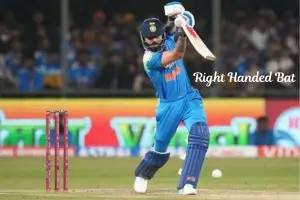
| Batting Style | Right Handed Bat |
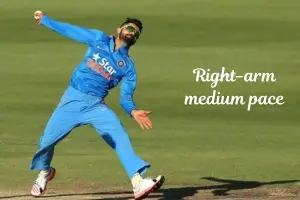
| Bowling Style | Right-arm Medium |
| Batting Career Summary | ||||
|---|---|---|---|---|
| Test | ODI | T20 | IPL | |
| Matches | 123 | 311 | 125 | 283 |
| Innings | 210 | 299 | 117 | 275 |
| Runs | 9230 | 14797 | 4188 | 9336 |
| Balls | 16608 | 15771 | 3056 | 6926 |
| Highest | 254* | 183 | 122* | 113 |
| Average | 46.85 | 58.72 | 48.7 | 40.42 |
| SR | 55.58 | 93.83 | 137.05 | 134.8 |
| Not Out | 13 | 47 | 31 | 44 |
| Fours | 1027 | 1376 | 369 | 844 |
| Sixes | 30 | 169 | 124 | 316 |
| Ducks | 15 | 18 | 7 | 12 |
| 50s | 31 | 77 | 38 | 68 |
| 100s | 30 | 54 | 1 | 9 |
| 200s | 7 | 0 | 0 | 0 |
| 300s | 0 | 0 | 0 | 0 |
| Bowling Career Summary | ||||
|---|---|---|---|---|
| Test | ODI | T20 | IPL | |
| Matches | 123 | 311 | 125 | 267 |
| Innings | 11 | 50 | 13 | 26 |
| Runs | 84 | 680 | 204 | 368 |
| Balls | 175 | 662 | 152 | 251 |
| Maidens | 2 | 1 | 0 | 0 |
| Wickets | 0 | 5 | 4 | 4 |
| Avg | 0 | 136.0 | 51.0 | 92.0 |
| Eco | 2.88 | 6.16 | 8.05 | 8.8 |
| SR | 0 | 132.4 | 38 | 62.75 |
| BBI | 0/0 | 1/13 | 1/13 | 2/25 |
| BBM | 0/0 | 1/13 | 1/13 | 2/25 |
| 4w | 0 | 0 | 0 | 0 |
| 5w | 0 | 0 | 0 | 0 |
| ICC RANKINGS | ||||||
|---|---|---|---|---|---|---|
| Current Rank | Best Rank | |||||
| Format | Batting | Bowling | All-Rounder | Batting | Bowling | All-Rounder |
| Test | -- | -- | -- | 1 | -- | -- |
| ODI | 1 | -- | -- | 1 | -- | -- |
| T20I | -- | -- | -- | 1 | 89 | 10 |
run machine Summary:
Virat Kohli’s career represents an extraordinary path filled with enthusiasm, determination, and outstanding achievements. From leading India to significant victories to establishing new standards in batting, he has made an unforgettable impact on international cricket. His legacy will keep motivating future generations, establishing him as not only an exceptional cricketer but also a genuine icon of the sport.
Early Life and Background
Virat Kohli, born on 5 November 1988 in Delhi, India. From an early age, he showed a keen interest in cricket. His father, Prem Kohli, encourage his passion and enrolled him in the West Delhi Cricket Academy in 1998. With proper coaching and disciplined training, Kohli rapidly evolved into a talented young cricketer.
A significant turning point in his early life occurred with the passing of his father in 2006. In spite of the emotional loss, Kohli demonstrated extraordinary resilience by continuing to play cricket, which ultimately played a crucial role in developing his strong mental fortitude.
Domestic Career and Ascent to Prominence
When Virat Kohli led India to win in the 2008 ICC Under-19 World Cup, he initially attracted national notice. Both cricket fans selectors were impressed by his leadership abilities and steady performances. His admission into international cricket was made possibly by his achievement.
Kohli demonstrated his ability to score runs under pressure by playing for Delhi in domestic cricket and putting up a number of great performances.
Smash into the Ranks
In August 2008, he quickly became a member of the senior Men in Blue in Sri Lanka. Virat Kohli was given the opportunity to start the batting in the ODI series due to the normal openers’ absence. As an opener he played some excellent and commendable knocks, and India went on to win the ODI series. However, Kohli was excluded from the team due to the powerful and well-established duo of Tendulkar and Sehwag.
The 20-year-old showed that he belonged at a far higher level and that junior cricket was beneath his capabilities by dominating attacks and continuing to impress for Delhi. After that, in 2009, Kohli went to Australia for the Emerging players tournament, where he dominated the bowling attacks. He included ‘big-match mentality’ in his resume as well, scoring a smooth hundred in the final against South Africa, and leading his team to a decisive win. The young talent, not yet old enough to enjoy his man-of-the-match champagne, concluded the tournament with 398 runs from 7 matches, featuring tow centuries and two fifties, making sure he stayed prominent in the selectors’ thoughts.
Bonding a national mark
Kohli’s impressive performance led to his inclusion in the Indian cricket team, where he quickly proved his worth by scoring his maiden ODI hundred in a crucial match against Sri Lanka in December 2009. In the 2011 World Cup final, he contribute significantly to India’s victory with a pivotal partnership alongside Gautam Gambhir.
Following the World Cup, Kohli made his Test debut in July 2011 and faced challenges adapting to different ball types, particularly in Australia, where his technique was tested on bouncy pitches. Despite initial struggles, he continued to evolve as a key player for the India Cricket Team.
A fire baptism in Australia
He gave a breakthrough performance on a bouncy Perth pitch, an outstanding 75, when a noticeable change in technique was evident. The skipper and selectors continued with him into the third Test. Throughout the innings he was to stand tall, adopt a more open stance, showcase his back-foot strokes. With his play in the series’ last Test, the erratic Kohli was able to overshadow his inappropriate behaviour. Kohli was the bright spot in the midst of the pandemonium, scoring India’s lone century of a dismal tour. In Adelaide, he strode to a hundred, demonstrating the will to progress and extraordinary focus under duress in the intense heat and pressure of Australia.
As he struggled to make it into the Test team, he broke several records in One-Day Internationals (ODIs), including the global record for the quickest to 9000 runs and the Indian record for the fastest to multiples of thousand runs in ODIs. Additionally, he won the ICC ODI cricketer of the year title in 2012 and was India’s top run scorer in ODIs for three years in a row (2010, 2011, and 2012)
That step-forward inning…
We recall the awards, but where did it all start? The 86-ball knock, in which he began as a bold youngster but ended like a man, is always the one innings that made every one take note. After M.S. Dhoni made the rather naive comment that India had already been eliminated from the tournament. Chasing an unlikely target of 321 off 40 overs to stay alive in the tournament, he laid into the Sri Lankan bowlers and carted his way to 133*, getting India home with more than 2 overs to spare.
It was King Kohli. The king of the run-chase and an abundance of modern-day ODI records.
Versatility Across Formats
Virat Kohli’s batting style showcases remarkable versatility. In Test matches, he emphasis patience, defense, and accuracy. In One Day Internationals, he strikes a balance between control and aggression, establishing himself as one of the top chasers in the game. In T20 games, he slightly adjusts his approach to incorporate creative shots while maintaining strong foundational skills.
His style represents an excellent combination of traditional cricketing values and contemporary versatility. His balance, footwork, discipline, and choice of shots distinguish him from his peers. Beyond mere innate ability, Kohli’s achievements stem from relentless practice, physical fitness, and mental resilience. His techniques stands as a perfect example for aspiring cricketers globally.
Captaincy
In light of regular captain MS Dhoni’s injury, Virat Kohli was appointed as the stand-in captain for the inaugural Test at Adelaide. Following a disappointing tour of England, skepticism surrounded Kohli’s potential performance during the Border-Gavaskar Trophy in December. However, Kohli dispelled any doubts by achieving two impressive centuries in the first Test at Adelaide. His remarkable second innings, where he scored 141 runs, nearly facilitate a remarkable run-chase on a notoriously challenging fifth-day pitch. Ultimately, he concluded the tour with a total of four centuries, effectively silencing his detractors.
As the Indian team geared up for their title defense ahead of the 2015 World Cup in Australia, the slogan ‘Won’t give it back’ became prevalent, with Kohli being identified as a pivotal player for the team. The Indian squad had endured a dismal performance in Australia, failing to secure a single victory in both the Test series and the subsequent ODI tri-series. Nevertheless, Kohli commenced the tournament in his signature style, delivering a typically aggressive century against Pakistan, thus maintaining India’s unbeaten record against their rivals in ICC events. Despite processing to the semi-finals without a loss, Kohli’s form took an unexpected downturn, culminating in a disappointing score of 1 in the semi-final defeat to the co-hosts and eventual champions, Australia.
During his tenure as the full-time Test captain, Kohli led a youthful team on a tour of Sri Lanka, absent the guidance of Mahendra Singh Dhoni, and mindful of the renowned Sri Lankan spinners’ prowess in the fourth innings. After suffering the loss in the first Test, Kohli’s India stagged a remarkable comeback to win the series 2-1. Continuing to build on his promising start as Test captain, he guided the team to a resounding victory over South Africa on a series of challenging pitches throughout India. Although Kohli’s batting performance was subdued as the more reserved batsman of his team took centre stage, the Triumph elevated India to the No. 1 position in the ICC Test rankings for the first time since they relinquished it to England following the disappointing whitewash in 2011.
IPL throughout time
Virat Kohli expressed his faith in the team ahead of the 2019 Indian Premier League (IPL) by saying he might finish his career with the Bangalore-based Royal Challengers. Since the beginning of the lucrative league in 2008, Kohli has been the only player to play for a single team throughout the competition. Ove time, he has grown to love both the team and its supporters.
Since joining the team in 2008 as a young, promising player, Kohli’s improvement has been incredible. Before establishing himself under Daniel Vettori, he gained experience under the coaching of Rahul Dravid and Anil Kumble. It wasn’t easy start, and having a struggling young player in the middle of a team that was having trouble grasping the tournament’s spirit wasn’t shocking. It was not surprising that he as the only player kept in 2011 after learning the ropes throughout the first three-year cycle. The purple patch started in that area, and he later demonstrated that it was more than simply a purple patch–it was a career that was about to take off. Soon after, Kohli emerged as the greatest player in both white-ball and red-ball cricket.
When he as appointed to serve as the Bangalore team’s permanent captain starting in 2012, it became obvious and resulted in increased batting consistency. As runs continued to pour off his bat, Kohli quickly became a fan favorite and went on to become the top run scorer in IPL history. In 2016, the captain of both India and the RCB scored 973 runs, the most of any player in the game’s history, including four hundreds, the most by a batsman in a single edition. Unfortunately, none of this resulted in a championship victory, which has kept Kohli and Bangalore waiting as of March 2023.